


Blackjack Guide Essential Tips to Avoid Bad Table Decisions
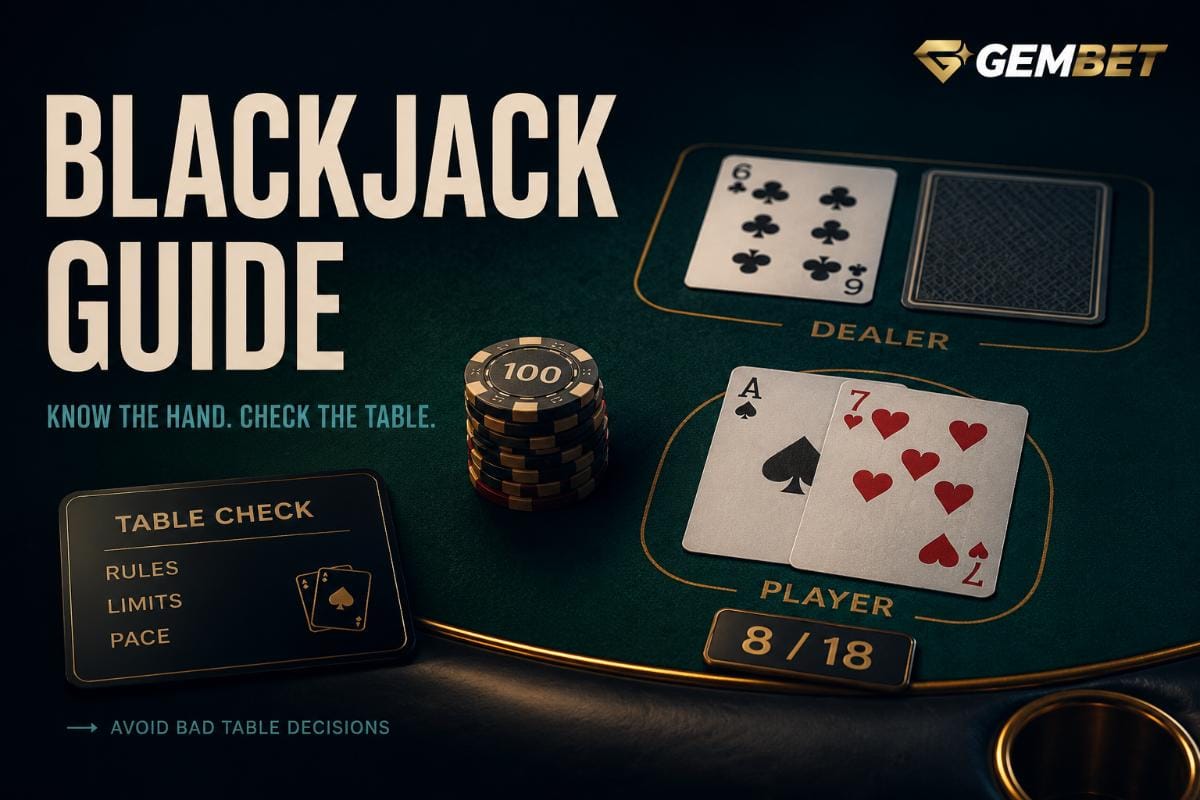
This blackjack guide helps new players understand the table before committing a stake. On Gembet, blackjack combines simple card totals with decisions such as hit, stand, split or double where the rules allow. Good habits matter because fast choices can create avoidable errors, while practical bankroll tips can keep wagering within a planned range. Table choice also matters because minimum stakes, dealer rules and payouts can differ.
Blackjack Guide Start With the Objective
The objective is to finish with a hand closer to 21 than the dealer without going over 21. You compete against the dealer, not against other players. A hand above 21 busts and loses immediately.
The dealer follows the fixed rules of the selected table, while players make their permitted decisions first. Understanding that sequence is useful because it prevents confusion when several people are seated at the same live table.
Learn the Card Values Before Anything Else
The card values are straightforward. Cards 2 through 10 count at face value. Jacks, queens and kings count as 10. An ace can count as 1 or 11 depending on which value keeps the hand valid and gives the better total.
For example, ace-7 can count as 18. If another 8 arrives, the ace can shift from 11 to 1, leaving 16 rather than 26. This flexibility is why some hands are called soft. You do not need advanced terminology to begin, but you should understand how the total changes.
Check the Rules Before You Sit Down
Useful table selection advice begins with the rules rather than the studio design. Two blackjack tables can look almost identical while using different minimum bets, blackjack payouts or dealer drawing conditions.
Open the information panel and confirm the rule set before placing a wager. Check the blackjack payout, whether the dealer hits or stands on soft 17, and which doubling or splitting choices are available. Do not assume the rules from another table automatically apply.
Betting Limits Should Fit Your Planned Stake
If you intend to play SGD 5 per hand but the minimum is SGD 25, joining that table immediately changes your financial exposure. The table should fit the amount you planned, not force you to rewrite the plan.
This is where simple bankroll tips become practical. Decide how much you are comfortable using before joining, then choose limits that let you keep the base stake consistent. A lower minimum does not improve your chance of winning. It simply gives you more control over the amount risked.
Use a Simple Session Example
Suppose you plan to use SGD 80 and choose an SGD 5 base wager. Sixteen SGD 5 wagers create SGD 80 of turnover if no additional stakes are added.
Turnover is not the same as loss because some hands may return payouts. Track total wagering instead of judging the session only by whether the previous hand won.
Blackjack Guide Understand Hit and Stand First
Hit means requesting another card. Stand means keeping the current hand. These are the two actions beginners should understand before thinking about additional choices.
Taking another card can improve a low total but can also cause the hand to exceed 21. Standing removes that immediate bust risk but leaves the total unchanged. Neither action guarantees a win because the dealer’s final hand still matters.
Use the Dealer Upcard as Information
The dealer normally shows one visible card before players act. It helps describe the starting position but does not reveal the hidden card or guarantee the final total.
A useful routine is to check your own total, note the dealer upcard and then make the permitted decision. One of the better habits is avoiding rushed clicks simply because the table is moving quickly. If the pace feels uncomfortable, choose another table rather than guessing.
Soft Hands Need Extra Attention
Because an ace can count as 1 or 11, some hands can accept another card without the same immediate bust risk as a hard total. Ace-6 can initially count as 17, but the ace can become 1 if another card would otherwise push the hand above 21.
Understanding these flexible card values helps you read the hand correctly. It does not mean every soft hand should be played the same way. The table rules and dealer upcard still matter.
Splitting and Doubling Increase Exposure
Where allowed, splitting turns a suitable pair into two hands and normally requires another stake. Doubling also increases the amount committed while limiting the hand to one additional card under standard rules.
These choices are why bankroll tips should account for more than the base wager. If you bring exactly enough for ten ordinary hands, a split or double can use funds faster than expected. Check what actions are available before play begins.
Side Bets Are Separate Wagers
Some blackjack tables offer optional side bets alongside the main hand. These can depend on specific card combinations and usually have their own payout structure.
Do not add one merely because the displayed return is larger. Strong table selection advice includes checking whether side wagers are optional, how much they cost and whether they fit the amount you planned to use.
Do Not Change the Stake After Every Result
Changing the next wager because the last hand won or lost can make a session harder to track. A losing hand does not make the next one more likely to win, and a short winning run does not guarantee another win.
Consistent habits make exposure easier to understand. If the planned base stake is SGD 5, moving to SGD 20 after a loss quadruples the amount risked without changing the uncertainty of the next deal.
Choose a Pace You Can Follow
Live blackjack tables can vary in speed. The right pace is the one that lets you check your cards, dealer upcard and stake without feeling pressured.
Useful table guidance therefore includes pace as well as limits. A slower table does not improve the cards, but it can reduce input errors. If the timer regularly feels too short, switching tables can be more sensible than trying to act faster.
Watch the Number of Hands
Twenty minutes at a fast table can involve more wagers than twenty minutes at a slower one. Thirty hands at SGD 5 create SGD 150 of base-stake turnover, while 15 hands create SGD 75.
These bankroll tips do not predict profit or loss. They show why game speed belongs in session planning. More hands mean more opportunities to place money at risk, even when the stake never changes.
Do Not Copy Another Player Blindly
Copying someone without understanding your own total can create mistakes when the two hands are different.
Build a routine around checking your own situation first. Read the total, recognise whether an ace is flexible and note the dealer upcard. Slower play can help while you are still learning.
Use Table Selection Advice Across Casino Games
Choosing the table before betting is useful beyond blackjack. Our roulette guide explains the same idea through wheel type, pace and betting limits. This blackjack guide adds another layer because rule variations and player decisions can differ from one table to another.
Do not choose solely from a table thumbnail or dealer presentation. Read the rules and make sure the minimum stake fits your plan.
Keep Card Values Clear as the Hand Develops
It is easy to recognise a two-card total and then hesitate after several hits. Add the cards carefully and remember that aces can change value when necessary. Face cards always count as 10 regardless of suit or rank.
Knowing the card values yourself helps explain why that number changes and reduces confusion when a hand contains more than one ace.
Blackjack Guide Build a Repeatable Check
A practical blackjack guide can use four checks before each hand: confirm the table rules, verify the stake, read your starting cards and note the dealer upcard. Then make only the actions permitted by the game.
Pair that process with sensible bankroll tips and a planned stopping point. Do not try to recover previous losses by increasing the next wager. A new hand is not obligated to compensate for earlier results.
Blackjack Guide Use Better Habits, Not Patterns
Good habits make blackjack easier to follow even though they cannot guarantee a result. Check the rules before joining, keep the stake within the planned range and slow down when a decision is unclear.
The strongest table selection advice is practical: choose limits and pace that fit your plan, then confirm rule differences before playing. Keep the hand totals clear and remember that your decisions affect how your hand develops without making the dealer’s final hand predictable.
On Gembet, use this blackjack guide as a preparation checklist rather than a promise of winning play. Understand the table, control the amount committed and make each decision from the current hand instead of the emotional result of the previous one.
Experience the real deal with SG's top Live Dealers. Play Baccarat, Roulette & more.

